
Hurricane 1, P2917, lost at Buxley Farm, near Tranent, 20th July, 1940
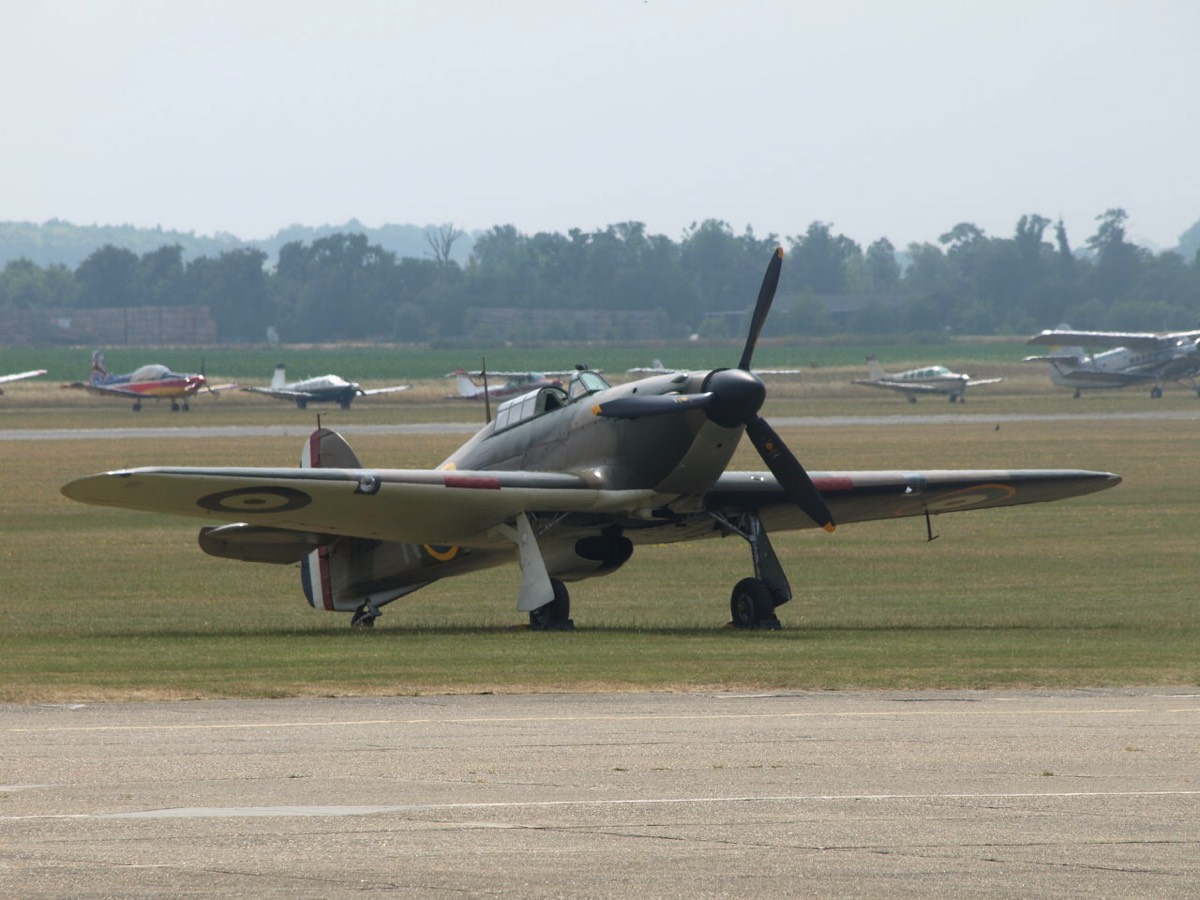
Photograph of a Hurricane similar to the one lost at Buxley Farm.
[David Haire]
P/O Alan R. Downer, RAFVR, 263 Sq RAF, aged twenty-two.
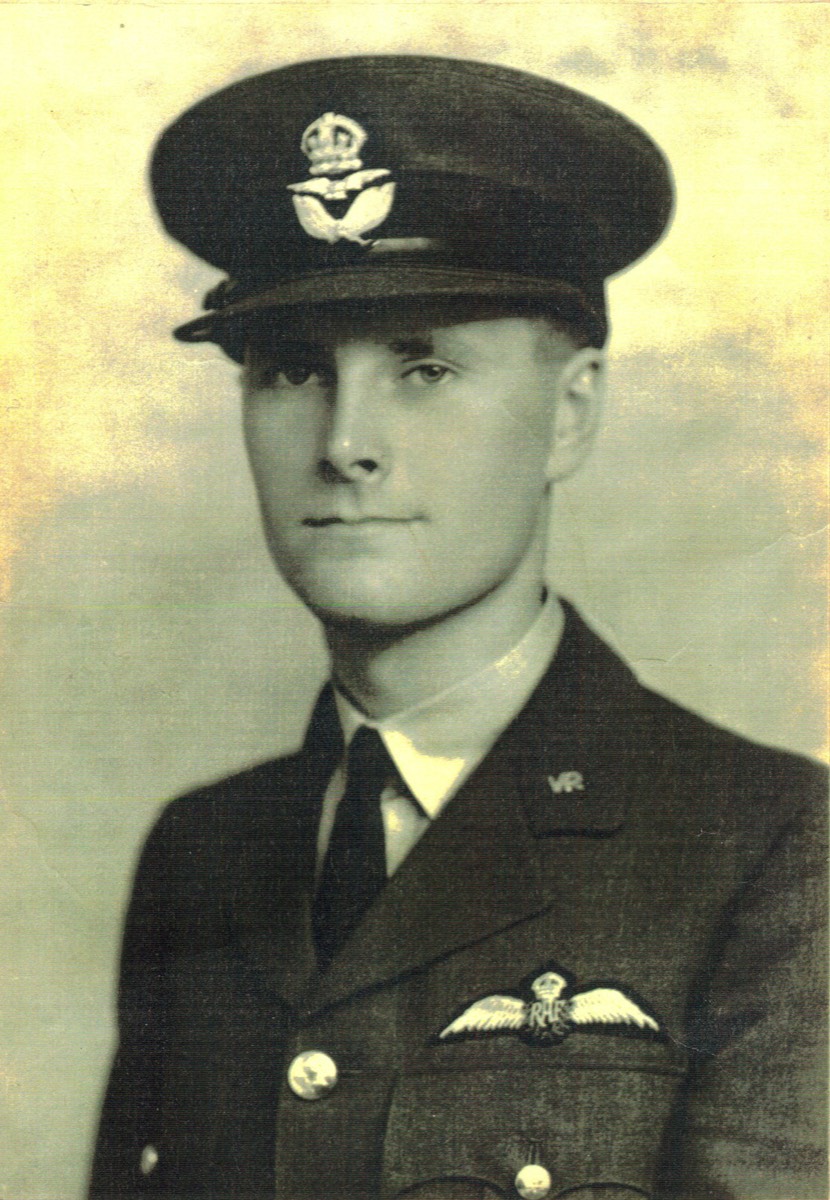
Pilot Officer Alan Richard Downer, RAFVR, 263 Sq RAF.
Alan Downer - early life
Little is known at present about the background to Alan Downer's life and how he came to join the RAF. He was born in 1918 and his parents, Frederick John and Bertha Downer, lived in Muswell Hill, Middlesex. Alan was eventually laid to rest in New Southgate Cemetery, just a short distance to the north of what was most likely his home. His name is on a memorial in Muswell Hill Methodist chapel. His squadron, 263, was flying Gladiators in the early months of the war and converted briefly to Hurricanes before becoming the first RAF Squadron to fly the new Westland Whirlwind. While flying Gladiators, 263 was involved in two expeditions to assist Norway, but there is no evidence to show that Alan Downer was sent on either. He was fortunate, as conditions there were difficult and fairly fluid and the Squadron was eventually ordered to leave and to return to the UK. Very sadly, ten of the pilots, who had done so much and so well in Norway, were lost when the aircraft carrier HMS Glorious was sunk on the return voyage by the Scharnhorst and Gneisenau.
Little is known at present about the background to Alan Downer's life and how he came to join the RAF. He was born in 1918 and his parents, Frederick John and Bertha Downer, lived in Muswell Hill, Middlesex. Alan was eventually laid to rest in New Southgate Cemetery, just a short distance to the north of what was most likely his home. His name is on a memorial in Muswell Hill Methodist chapel. His squadron, 263, was flying Gladiators in the early months of the war and converted briefly to Hurricanes before becoming the first RAF Squadron to fly the new Westland Whirlwind. While flying Gladiators, 263 was involved in two expeditions to assist Norway, but there is no evidence to show that Alan Downer was sent on either. He was fortunate, as conditions there were difficult and fairly fluid and the Squadron was eventually ordered to leave and to return to the UK. Very sadly, ten of the pilots, who had done so much and so well in Norway, were lost when the aircraft carrier HMS Glorious was sunk on the return voyage by the Scharnhorst and Gneisenau.
P/O Downer's crash, 20th July, 1940
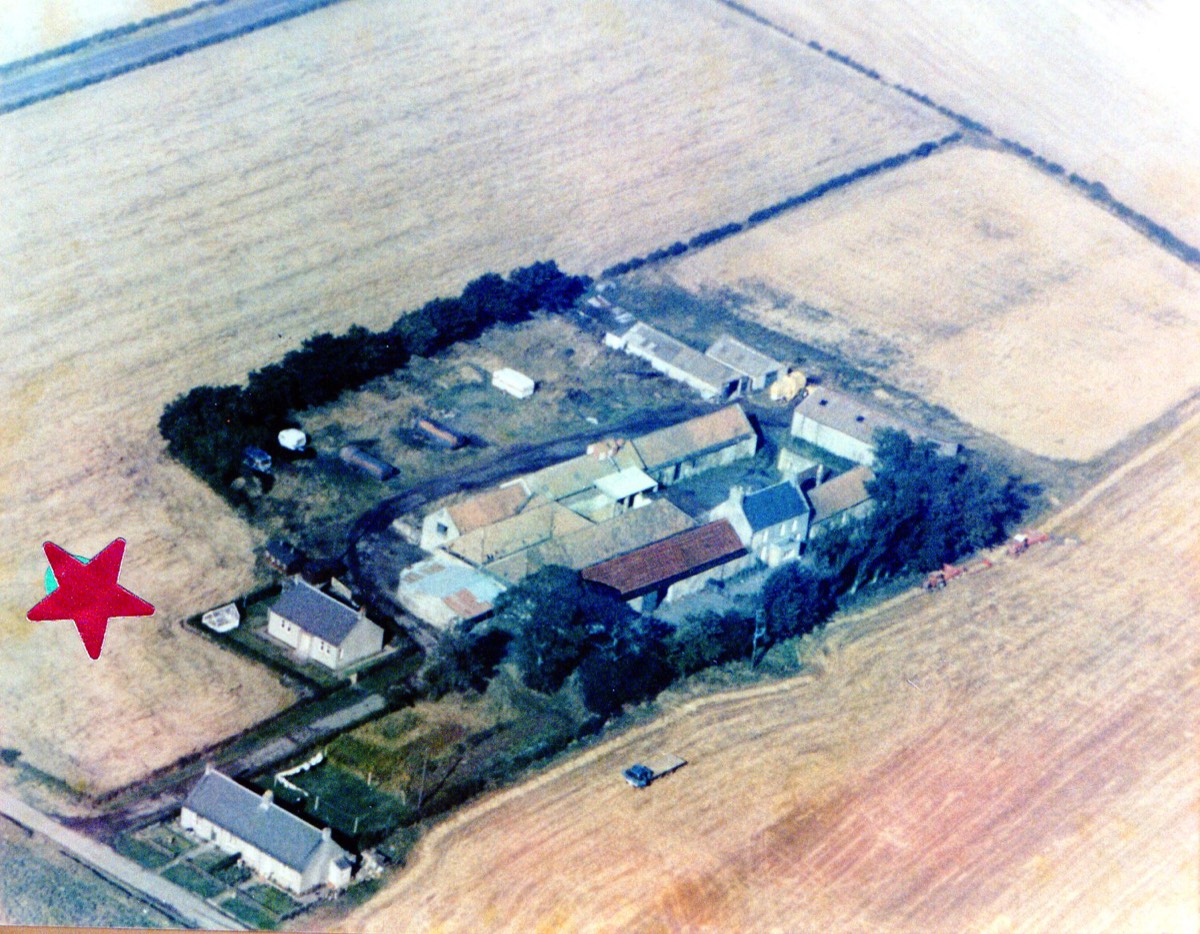
Aerial photo of Buxley Farm, near Tranent, East Lothian
The crash, the rescue and the aftermath.
Most sources claim that Alan Downer flew from RAF Drem on the 20th July, 1940, and that is more than likely the case. However, 263 Squadron had moved to RAF Grangemouth with a detachment in RAF Turnhouse by this time, so it's possible he flew originally from either of these stations. His brief was to undertake a sector reconnaissance and he arrived in the Tranent area when his Hurricane suffered a severe engine failure. Mr Gordon, a twelve year old boy who lived in New Winton at the time, witnessed the aircraft in distress. He passed on the following account: "…he recalls seeing three aircraft in the sky over the village. One seemed to have trouble with the engine as smoke was coming from the engine area. It tried to make a forced landing but it seemed to strike a hedge, he thought." Another unknown eye-witness, described "…witnessing the aircraft burning close to the farm steading at Buxley. It was summertime … and he was on holiday from school and was with his father in their motor van passing on their way to Ormiston to sell fish. He remembers seeing and hearing the ammunition exploding and men trying to help the pilot out of the cockpit. It was very scary!'
A third witness, Robert Fairgreive, a local GPO worker, was visiting the farm when the plane came down and he wrote: "…the Hurricane came from the direction of RAF Macmerry. Its wing caught the wires of a Radio ariel which caused it to slew almost back in the direction of its approach . It caught fire and the ammo started to explode. Mr Moffat and some other men who were at the steading assisted William Moffat to release the pilot. They had to use an axe to cut the airman free, at great danger to themselves." On a later occasion, Robert added some more details to what he had seen: He wrote: 'We heard two really loud thumps and ran to the field. William ran to the place with Hugh Kenny and others and used an axe to cut the parachute webbing and get the pilot free. By the time they released him, flames had crept up from the bottom of the plane. The pilot was badly burned when they got hm out and they rolled him to put out the flames. Bullets were rattling off the side of the house. It was dangerous, it could have blown up."
As Robert and the others describe, a number of men, who were all nearby at the time of the crash, ran out to help. Clearly the rescue was carried out in very dangerous conditions, as the plane was on fire and its ammunition was going off. According to the Edinburgh Evening News those involved included twenty-two year old farmer William Moffat, a ploughman from Haddington, Hugh Kenny, and a potato inspector, Alexander Little. It is possible that a fourth person, George Hamilton, was also involved. His contribution to a rescue was recognised by the Boy's Brigade, which noted that one of their members, George, had been awarded the Queen's badge of merit for bravery for his part in hauling a pilot from a burning Hurricane. However the dates in the evidence I have, refer to the 11th/12th March 1939, and, unless bad errors were made in entering dates, must refer to another very similar incident. It's clear that William Moffat took the leading part in the rescue of Alan Downer and, for his bravery and for his total disregard for his own safety, he was awarded the George Medal, the civilian equivalent of the Victoria Cross. Hugh Kenny must also have played an important part in that day's events as he was awarded the King's Commendation for bravery on the 28th February, 1941.
What happened was reported in the local newspapers at the time and the following is the headline from the Evening News: "Blazing 'plane rescue by three Scots."
It's apparent that, after the crash landing, Alan Downer had been unable to release himself from his harness and was thus trapped in his burning plane. William Moffat and the others had to cut through this to release him. This must have taken crucial time and Alan Downer suffered such serious burns that his rescue ultimately proved insufficient to save his life. He was taken by ambulance into Edinburgh Castle hospital but sadly died the next day.
A third witness, Robert Fairgreive, a local GPO worker, was visiting the farm when the plane came down and he wrote: "…the Hurricane came from the direction of RAF Macmerry. Its wing caught the wires of a Radio ariel which caused it to slew almost back in the direction of its approach . It caught fire and the ammo started to explode. Mr Moffat and some other men who were at the steading assisted William Moffat to release the pilot. They had to use an axe to cut the airman free, at great danger to themselves." On a later occasion, Robert added some more details to what he had seen: He wrote: 'We heard two really loud thumps and ran to the field. William ran to the place with Hugh Kenny and others and used an axe to cut the parachute webbing and get the pilot free. By the time they released him, flames had crept up from the bottom of the plane. The pilot was badly burned when they got hm out and they rolled him to put out the flames. Bullets were rattling off the side of the house. It was dangerous, it could have blown up."
As Robert and the others describe, a number of men, who were all nearby at the time of the crash, ran out to help. Clearly the rescue was carried out in very dangerous conditions, as the plane was on fire and its ammunition was going off. According to the Edinburgh Evening News those involved included twenty-two year old farmer William Moffat, a ploughman from Haddington, Hugh Kenny, and a potato inspector, Alexander Little. It is possible that a fourth person, George Hamilton, was also involved. His contribution to a rescue was recognised by the Boy's Brigade, which noted that one of their members, George, had been awarded the Queen's badge of merit for bravery for his part in hauling a pilot from a burning Hurricane. However the dates in the evidence I have, refer to the 11th/12th March 1939, and, unless bad errors were made in entering dates, must refer to another very similar incident. It's clear that William Moffat took the leading part in the rescue of Alan Downer and, for his bravery and for his total disregard for his own safety, he was awarded the George Medal, the civilian equivalent of the Victoria Cross. Hugh Kenny must also have played an important part in that day's events as he was awarded the King's Commendation for bravery on the 28th February, 1941.
What happened was reported in the local newspapers at the time and the following is the headline from the Evening News: "Blazing 'plane rescue by three Scots."
It's apparent that, after the crash landing, Alan Downer had been unable to release himself from his harness and was thus trapped in his burning plane. William Moffat and the others had to cut through this to release him. This must have taken crucial time and Alan Downer suffered such serious burns that his rescue ultimately proved insufficient to save his life. He was taken by ambulance into Edinburgh Castle hospital but sadly died the next day.
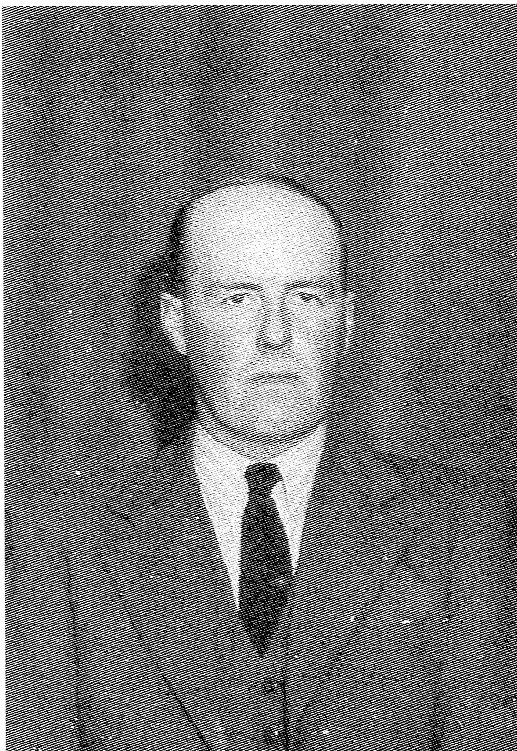
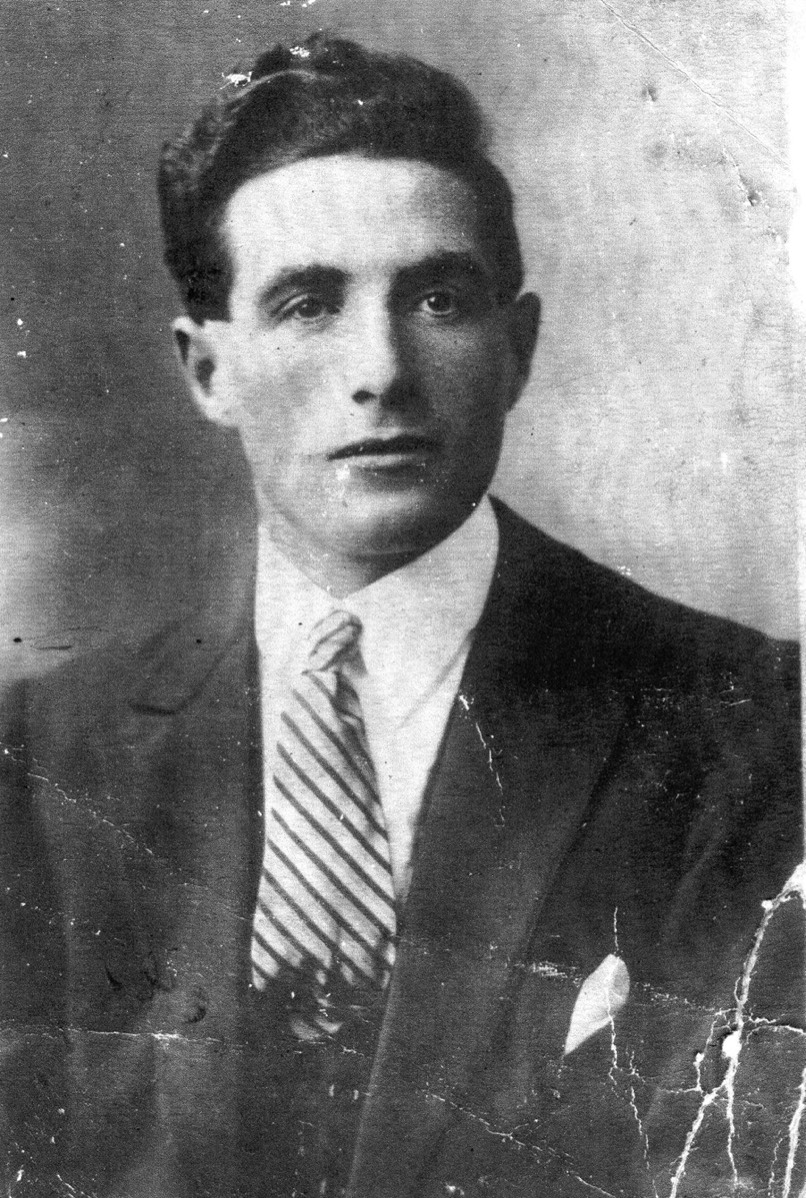
William Moffat, George Medal,
farmer at Buxley Farm
Hugh Kenny, King's Commendation for Bravery,
ploughman, Buxley Farm
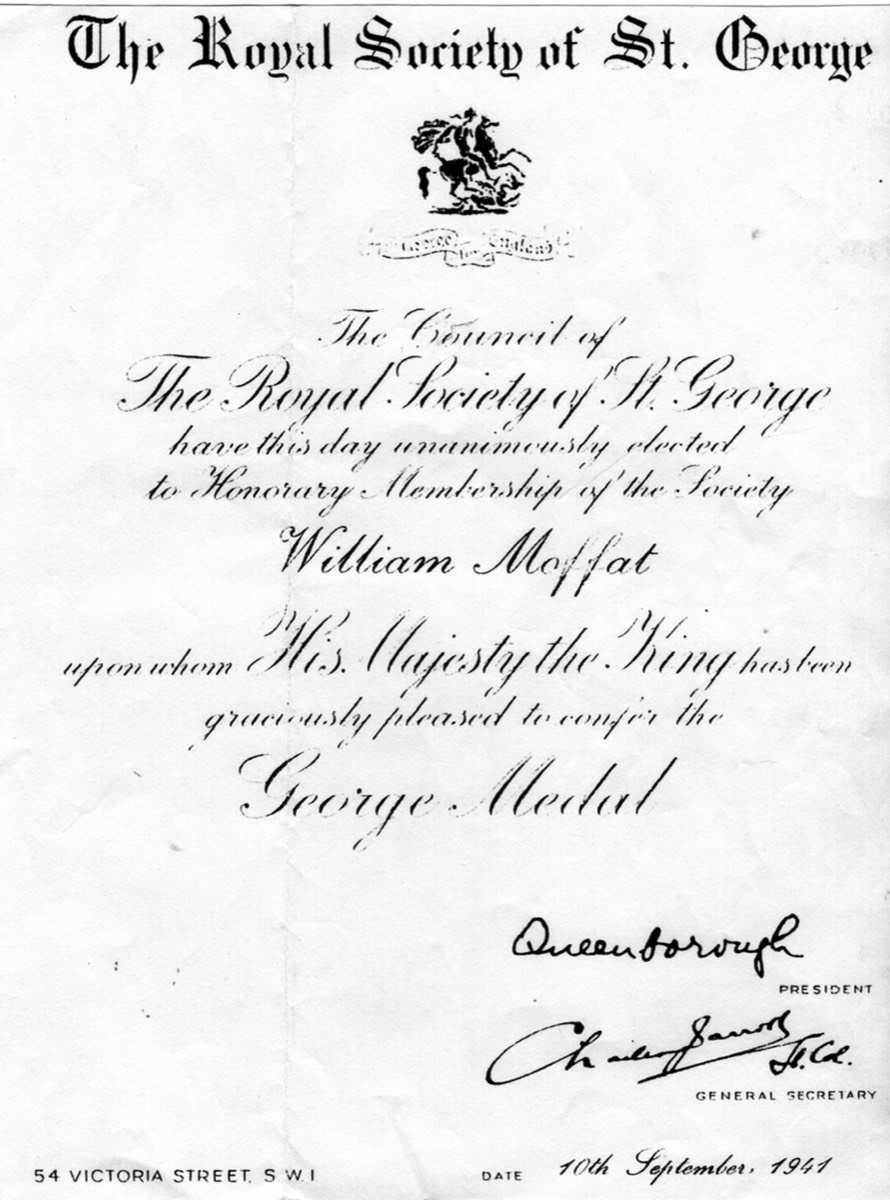
The announcement William Moffat received telling of the award of the George Medal for his actions on the 20th July, 1940.
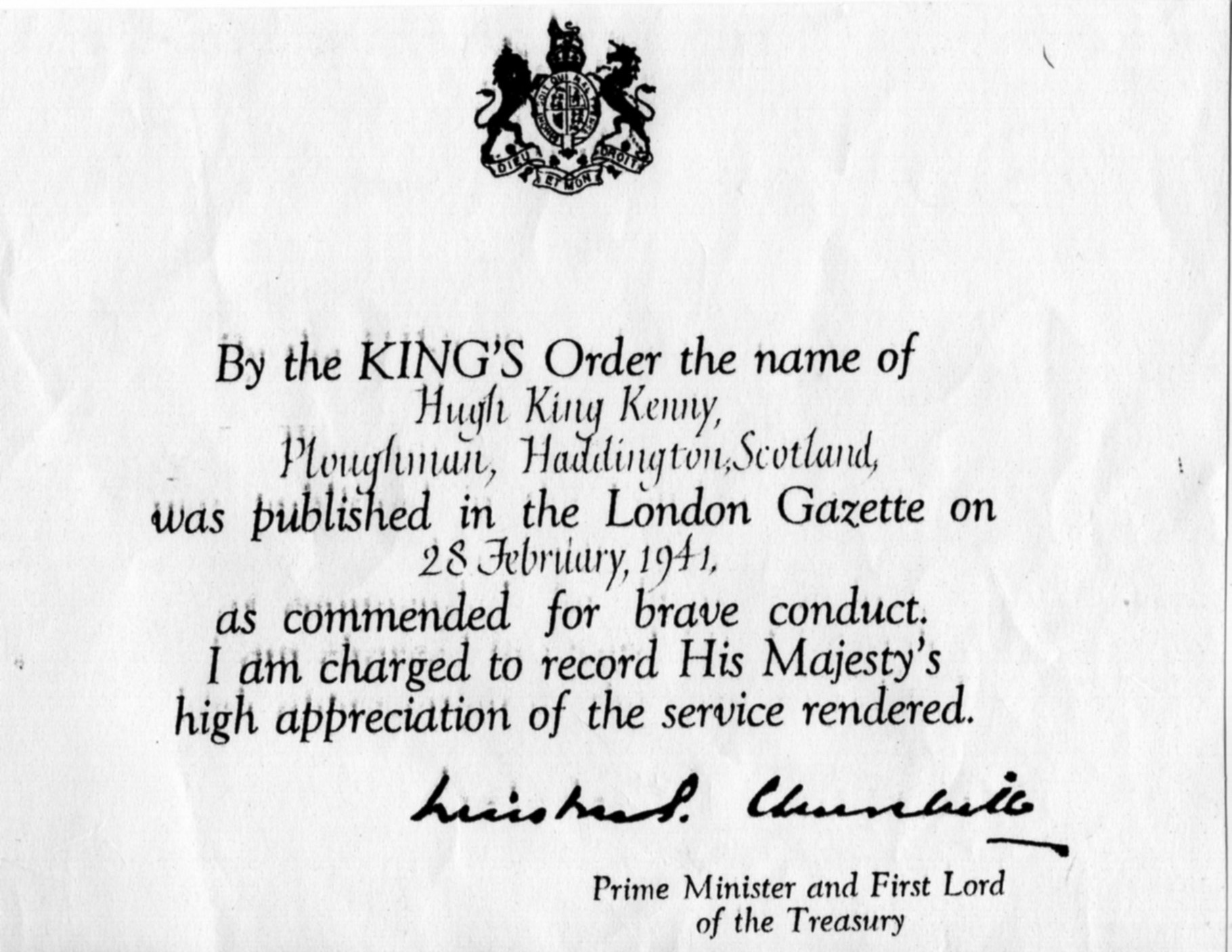
The award received by Hugh Kenny for his part in the rescue of Alan Downer on the 20th July, 1940.
David Downer learns the details of his brother's crash
Poignantly, Alan Downer's relatives, including his parents and brother, were totally unaware of the details of Alan's crash due to wartime restrictions on the dissemination of information. All they knew was that Alan had crashed in the Tranent area. His brother, David Downer, didn't learn the full story until Jack Tully-Jackson and his researchers delved into the Buxley crash in the late 1990's and, after admirable persistence, found out where Alan's surviving relatives were living and got in touch. Jack then assisted David and his wife, when they came to visit Buxley in May 1998. David was able to speak to Robert Fairgrieve (then aged seventy) and learn the full details of the crash. They are all pictured below when David came to visit in 1998.
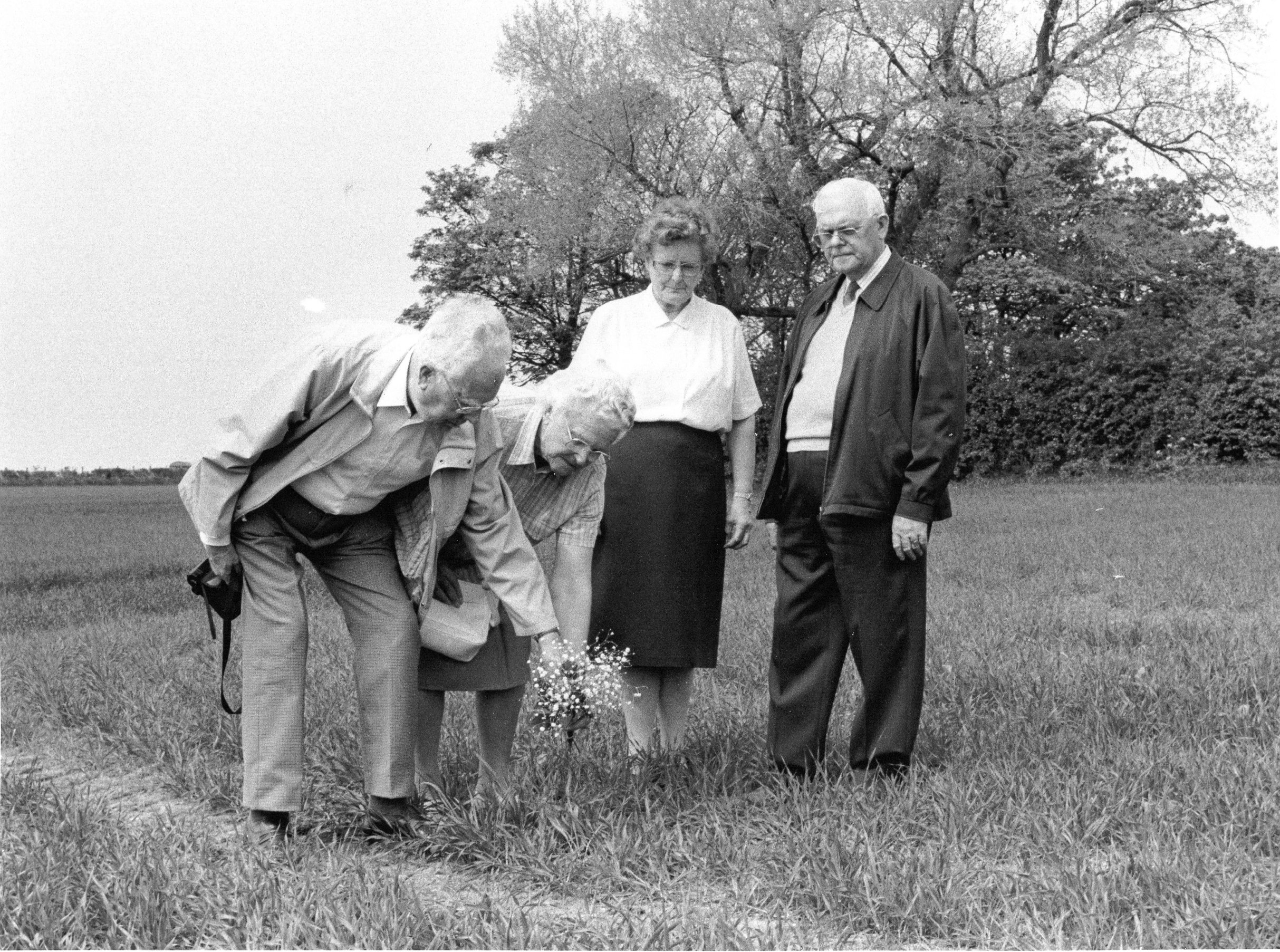
David Downer and his wife (on the left) lay a small floral tribute at the site of the loss of his brother, Alan Downer. Robert Fairgrieve and his wife are standing on the right.